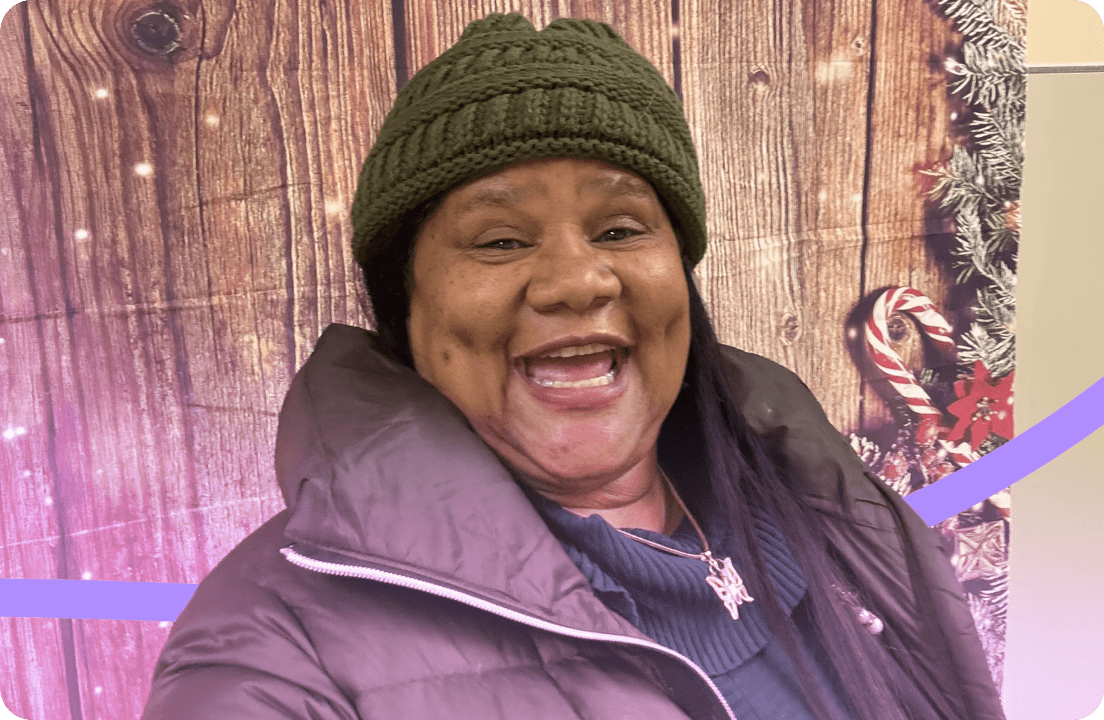
Pam Parker
“I Don't Look Like What I've Been Through”: Pam Parker’s Story of Survival
Pam Parker was wrestling on the couch with her daughter and a few friends—just an ordinary afternoon of fun—when her daughter pointed at her foot.
"Mom, why is your toe purple?"
Pam looked down. Her toe was, in fact, purple.
That moment in 2009 was the start of a journey that would take Pam through peripheral artery disease (PAD), a heart attack, and what she now calls the worst pain of her life: a blood clot in her leg. Today, the former physical education teacher uses her story to push for awareness, faster diagnosis, and better outcomes—especially for women and people of color.
"I don't look like what I've been through," Pam Parker told VLN.
The Purple Toe That Saved Her Foot
After her friend insisted she get the toe checked, Pam called her general practitioner. He took one look and told her it was a vascular issue. She researched specialists, found a vascular surgeon nearby, and went in expecting an exam.
She got an emergency surgery instead.
"Excuse me?" Pam recalls saying when the surgeon told her she had a serious blockage in her leg and needed surgery right away. "What are we talking about?"
She wasn't ready to believe it. She asked the team to call her brother, who is also a clinician.
"Pam, you have to have this surgery," he told her. "It's a blockage in your leg, in your arteries, and they're going to put something in to unblock it."
The procedure—a femoral-popliteal bypass, which reroutes blood flow around a blocked artery in the leg—saved her foot and her toe.
Looking back, Pam realized she'd had warning signs. Her legs had been hurting for a while, but she'd chalked it up to being on her feet all day as a PE teacher. She was also a smoker at the time. No one had ever told her smoking could cost her a limb.
"If someone had told me that smoking cigarettes would cause me to lose my limbs, you would not have ever had to worry about me smoking another cigarette," Pam said.
After the bypass, she smoked less. Five years later, after her heart attack, she quit for good.
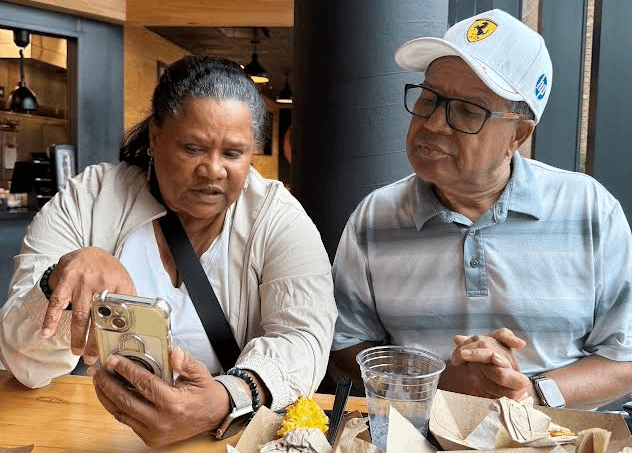
Pam and her brother looking at her test results and discussing her next moves in treatment.
'I Just Felt Unbalanced'
In April 2014, Pam was at home getting ready to celebrate her god-son's 21st birthday when something felt off.
There was no chest pain. No tingling arm. No “elephant sitting on her chest.”
"I just felt unbalanced," Pam said. "I knew something wasn't right."
She called 911. Because her blood pressure was high, paramedics gave her nitroglycerin and aspirin as a precaution. But the EKG did not show signs of a heart attack, and she waited nearly two hours at the hospital without being monitored.
When someone finally came to check on her, she was told she was probably just having an anxiety attack.
"I had never had anxiety," Pam said. "But that's what they put it off on women. 'Oh, you just have anxiety. Oh, you're just Superwoman, you're doing too much.'"
Then a stranger walked into the lobby and announced he had meningitis.
Pam looked at her daughter and said, "Let's go."
She believes that moment was a sign from God.
"It was the act of God that brought that person in to say 'meningitis' for me to leave," Pam said. "Otherwise I could've still been sitting there."
She signed paperwork to leave against medical advice. She wanted to go home, shower, and head to a different hospital. The moment hot water hit her body, she had her first real symptom.
It was a sharp pain spreading across her chest, almost like indigestion—not the crushing weight she'd seen in movies.
"Okay, this is it," Pam remembers thinking. "But we can't call the ambulance because they're going to take me back to the same hospital."
Her daughter drove her instead—a 35-minute trip Pam thinks her daughter made in 15. By the time they pulled up to the hospital, Pam was vomiting and going into full cardiac arrest. She remembers holding her daughter's hand as the team rushed her in. She remembers telling her daughter to finish college.
She survived. The team placed stents through a catheter through her groin and placed stents in her right coronary artery. After she came out of the procedure, her doctor checked on her and asked how she felt.
"Okay," Pam told him. "I just have a little pain right here."
That was enough. He told her they had to go back in. They placed another stent.
Why Women's Heart Attacks Don't Look Like Men's
When Pam later trained as a WomenHeart champion at the Mayo Clinic in Rochester, Minnesota, she finally understood why her heart attack didn't look like the ones in TV ads.
Some women feel pain in their pinky finger. Some feel nauseous. Some, like Pam, just feel "unbalanced."
The classic image of a heart attack—an elephant sitting on the chest—isn't wrong. It's just incomplete.
"That's usually the perspective of what a man feels—and specifically what a white male feels," Pam said. "A lot of the treatment is geared toward that. But it's so different for women. It is so different."
She also learned something she wishes someone had told her in that first hospital lobby: a normal EKG does not rule out a heart attack. A blood test for cardiac enzymes can detect heart damage even when an EKG looks fine.
It was also at the Mayo Clinic, while looking at images of her own heart, that Pam first understood she didn’t just have a heart attack. She had heart disease. Genetics played a role; her father had several heart attacks and open-heart surgery.
“Before, I just thought I was a PE teacher who had a heart attack,” Pam said.
Seeing those images made the diagnosis feel real. Pam cried, pulled herself together, and kept learning.
"If I hadn't been an advocate for myself, I wouldn't be here telling my story."
The Worst Pain of Her Life
A couple of years ago, Pam started having pain in her legs again. She figured she might need another bypass. She went in expecting that conversation.
It wasn't a bypass she needed. It was emergency surgery for a blood clot in her right leg.
The team first tried a thrombectomy, a procedure to physically remove the clot. It didn't work. They put her on a heparin drip (to break down the clot) and gave her morphine (for the pain). She was still in pain. They moved her to the ICU.
"My daughter was there while I screamed at the top of my lungs for who knows how long," Pam said.
A nurse held her hand through the worst of it.
"To this day, I am sorry that I do not know this nurse, because I feel like I need to give her a bigger thanks for what she did," Pam said. "She held my hand and kept me there."
Eventually, Pam felt herself slipping.
"I'm going to pass out," she told the nurse.
"It's okay," the nurse told her. "We've got you."
After her recovery, Pam asked her doctor what she could do to make sure she never had another clot, including changing her diet, quitting drinking, or anything else she could control.
The answer wasn’t what she hoped for. There wasn’t one clear change she could make to lower her risk of another clot. Still, the experience left her on guard.
"I'm very careful," she said. "I don't want to experience that ever again."
Today, she takes Xarelto® (rivaroxaban) and 81 mg of aspirin every day, along with medications for her cholesterol and blood pressure, and an insulin pump for diabetes.
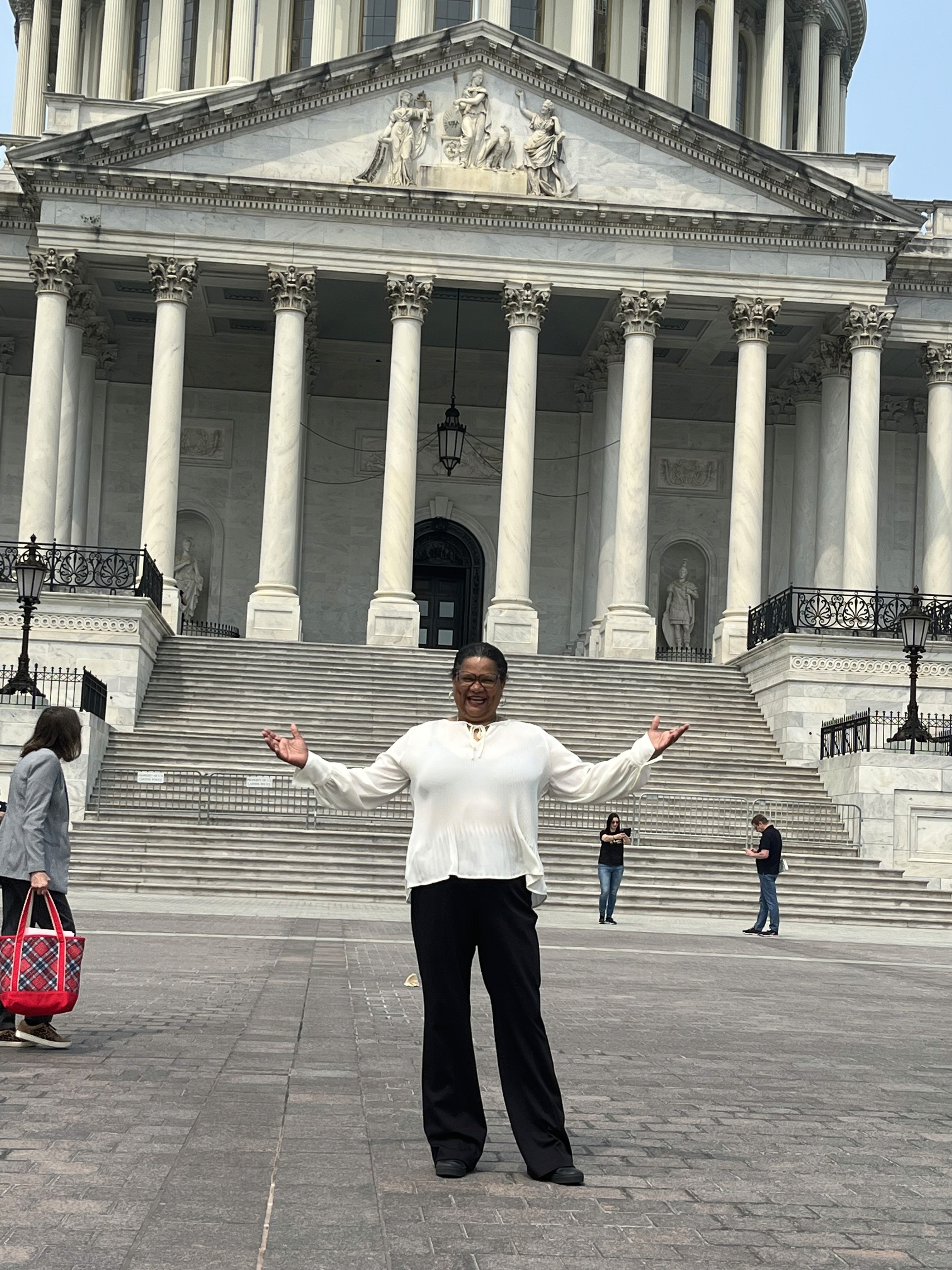
Pam in front of Congress fighting for a bill.
Turning Pain Into Advocacy
After her PAD diagnosis in 2009, Pam started researching the disease and was stunned by what she found… and didn't find. Public awareness was low. Even some clinicians were just beginning to recognize PAD.
She joined Vascular Cures as a patient advocate, started telling her story on panels, and began writing patient-focused updates for a quarterly medical publication.
She also got involved with Save Your Legs, where she learned that Black Americans are more likely than their non-Black peers to lose a limb to PAD. Pam, who is of African American and Native American descent, took that statistic personally. She wrote a PAD curriculum for her students in Washington, DC, hoping the information would travel home through them.
It did.
One of her young students came back to class in tears.
"Miss Parker, if I had known this earlier, I might have been able to save my mama's leg," Pam remembers her saying.
"That hit me and let me know I'm doing the right thing," Pam said. "Awareness and education are the keys to anything."
After her 2014 heart attack, Pam added cardiovascular advocacy to her work. She trained as a WomenHeart champion. She has been featured on a billboard in Houston. And she has gone before Congress in support of legislation requiring insurers to cover cardiac enzyme blood tests—the very test that can detect a heart attack when an EKG misses it. The bill passed.
'Keep Moving'
Pam still works out three times a week with her trainer, Tiana Rodgers at Antiox Wellness. She follows a personalized eating plan from a dietitian when she can stick to it. She uses a vibration plate in the morning, which she said has helped her neuropathy. She used to hike, and she misses it.
She knows her conditions are serious. She also knows what she'd say to anyone newly diagnosed.
"Keep moving," Pam said. "When you are still in anything in life, that's when things attract to you. As long as you move, things will fly off of you. So you've got to move through the pain."
"Tomorrow isn't promised," she said. "But when it comes, you can do better than you did the day before."