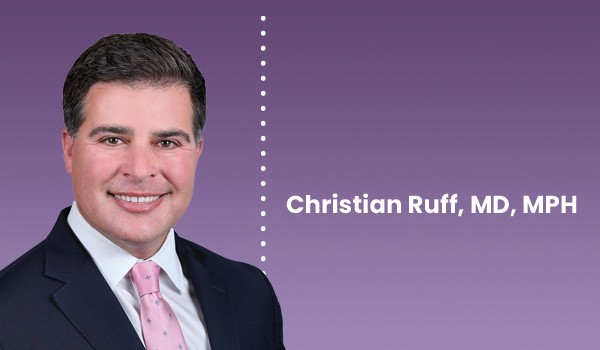
Board Member Spotlight: Meet the People Behind the Work
Last Updated
Apr 11, 2026
At VLN, our work is guided by board members who bring deep clinical and research expertise to vascular health education.
In this opening installment of our Board Member Spotlight, we’re introducing the people helping guide VLN’s work. This issue features Christian Ruff, President of VLN, Director of General Cardiology at Brigham and Women’s Hospital, Associate Professor of Medicine at Harvard Medical School, and a leading clinical trialist with the TIMI Study Group. His work focuses on cardiovascular disease, blood clots, and stroke prevention.
What drew you to your work in this field?
Dr. Ruff's path into cardiology was shaped early by personal experience. His twin sister was born with a congenital heart defect and underwent heart surgery as a child. That experience had a lasting impact on him and his family. “Time stands still when a family member, a loved one, has a serious medical condition,” he said, reflecting on how grateful they were for the care, reassurance, and compassion shown by the healthcare team during an incredibly stressful time.
Later, when his grandmother developed Alzheimer’s disease, he again saw how meaningful compassion and support can be—especially in helping patients and families cope with a difficult illness and diagnosis.
Together, these experiences shaped his desire to go into medicine, and particularly academic medicine, where he could care for patients while also being involved in education.
In your work, what do you think patients often misunderstand—or don’t hear enough about—when it comes to their condition or vascular health in general?
One of the most common misunderstandings Dr. Ruff sees is how much control patients actually have over their health. After a diagnosis, many people feel powerless and assume their outcomes depend entirely on medications or procedures.
While treatments matter, he emphasized that daily habits play a major role in long-term outcomes. “What people do in their day-to-day lives makes a huge difference,” he said, pointing to physical activity, lifestyle choices, and behaviors that can worsen or improve symptoms.
He also noted that medicine often focuses more on treating disease than preventing it. Maintaining vascular health early—long before a diagnosis appears—is often far more impactful than managing disease later. “We do a good job managing disease,” he said, “but we have to do a much better job talking about prevention and maintaining health.”
What’s one thing you wish every patient felt more comfortable asking about during their care?
Dr. Ruff encourages patients to be active participants in their care. Medical visits can feel rushed or intimidating, and patients may hesitate to speak up when they don’t understand something or feel unsure about a recommendation. “It’s your body,” he said. “You have to be comfortable with every decision that’s made.” He believes patients should feel empowered to ask why a treatment is recommended, what alternatives exist, and how different options align with their goals and concerns.
He also emphasized that healthcare should be a partnership. Clinicians bring medical expertise, but patients bring lived experience—and both are essential in making informed decisions.
Is there a habit or practice you often talk about with patients that you also try to follow yourself?
Dr. Ruff shared that he’s become more intentional about practicing the same habits he encourages in patients. Earlier in his career, busy schedules sometimes made consistency difficult. Now, he prioritizes routines—taking medications regularly, staying hydrated, exercising, and paying closer attention to nutrition. He described becoming more mindful of sodium intake by reading food labels and choosing minimally processed foods, noting that he was surprised by how much sodium he had been consuming before.
Following this advice himself has given him a deeper appreciation for how challenging lifestyle changes can be—and how important consistency really is.
Why is it important for you to be involved with Vasculearn Network?
For Dr. Ruff, education is one of the biggest gaps in healthcare today. Despite advances in science and treatment, patients and clinicians alike are often overwhelmed by information and unsure what sources to trust. “There’s so much noise out there,” he said. “Physicians and patients are overwhelmed, and it’s hard to figure out what’s real.”
He emphasized that education is often divided. “Healthcare is a therapeutic relationship between patients, their caregivers, and healthcare providers,” he said. “But so much of the education happens in two separate domains, and that leads to gaps in communication and understanding.”
He values VLN’s commitment to expert-curated, unbiased information and to building a supportive community. Creating “a safe home of valuable information” helps people feel more confident, informed, and less alone as they navigate complex vascular conditions.
Keep a Pulse on Progress
Explore our community and collaborate to build and utilize top-tier, trustworthy, and balanced medical education
