
When Are Symptoms Worth Discussing With a Clinician?
Last Updated
Jun 15, 2026
Cardiovascular symptoms aren’t always dramatic. They can be mild, develop gradually, or feel like ordinary tiredness or stress. When symptoms seem like they’re a part of your daily life, they’re easy to explain away, and that makes it hard to know when a symptom is worth addressing with your doctor..
Symptoms Don't Always Look the Way You Expect
Many people think of a serious health condition as something sudden and hard to miss. A heart attack is usually pictured as severe chest pain. A stroke is often associated with facial drooping or slurred speech. These symptoms are real, but they’re not the only warning signs.
Heart and blood vessel conditions can show up in many different ways. Some symptoms develop gradually over days, weeks, or even months. Others may come and go, making them easy to overlook or dismiss.
Symptoms can also vary from person to person. Women and older adults are more likely to experience symptoms that look different from the "classic" signs often shown in public awareness campaigns. Some people may instead notice unusual fatigue, shortness of breath, nausea, or pain in the jaw, neck, or back, with or without chest discomfort. Blood vessel conditions, like peripheral artery disease, may also present in different ways. While some people experience leg pain, others may first notice swelling, skin changes, or tiring more quickly with activity.
Pay Attention to Patterns, Not Just Individual Symptoms
A single symptom doesn’t always tell the whole story. Fatigue, dizziness, leg swelling, and shortness of breath can each have many possible causes. For that reason, clinicians often look at patterns of symptoms rather than focusing on one symptom by itself.
Symptoms That Occur Together
Symptoms often mean more when they happen together than when they happen on their own. For example, feeling tired after a poor night's sleep is common, but fatigue and shortness of breath occurring together—especially during activities that used to feel easy—can be a sign that something’s changed. Dehydration, a skipped meal, or certain medications can cause dizziness, but dizziness that occurs with fatigue or shortness of breath may be more meaningful than dizziness alone. These combinations don’t automatically mean there is a health problem, but they shouldn’t be ignored.
Symptoms That Are Getting Worse
Some symptoms become more noticeable, happen more often, or feel stronger as the weeks pass. Mild swelling in the legs or feet can happen after a long flight, a day of standing, or hot weather—but swelling that doesn’t go away or gets worse may be a sign that something else is going on.
Symptoms That Affect Daily Life
If you find yourself avoiding activities because of leg symptoms, or becoming less active than usual because of fatigue or discomfort, pay attention to those changes. A symptom that affects your ability to do everyday activities can provide important clues about your overall health.
How to Prepare to See a Clinician
If you decide a symptom is worth discussing, you don’t need to have all the answers before your appointment. A few details, though, can help your clinician better understand what you’re experiencing.
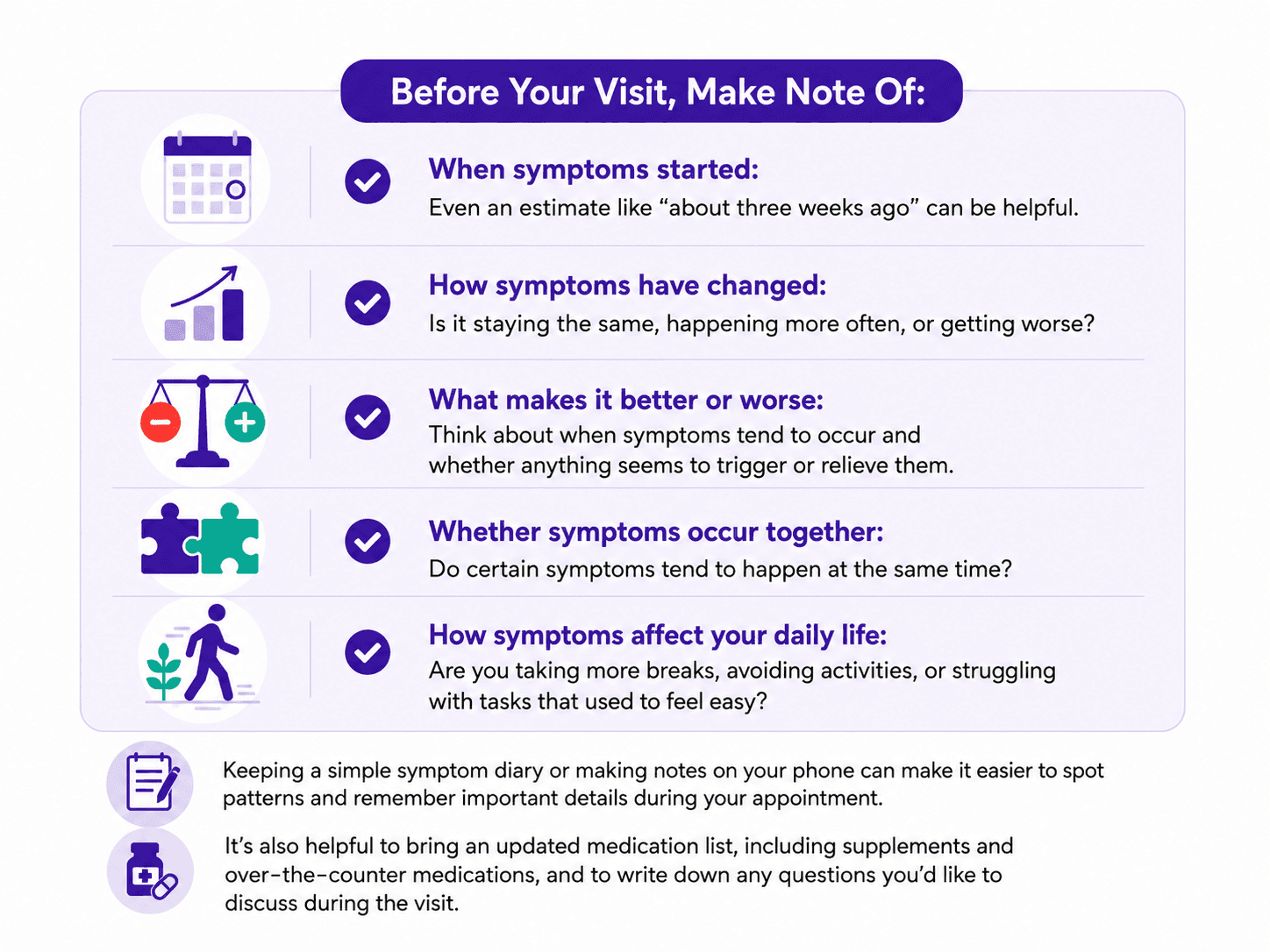
Deciding whether a symptom is worth mentioning can be the hardest part. You don’t need to wait until a symptom becomes severe before bringing it up. A concern that turns out to be minor is still a reasonable thing to discuss with a clinician. If you’re unsure if a symptom matters, it’s okay to ask. You know your body best.
References:
Damluji AA, Forman DE, Wang TY, et al. Management of acute coronary syndrome in the older adult population: A scientific statement from the American Heart Association. Circulation. 2023;147(3):e32-e62. doi:10.1161/CIR.0000000000001112
Jurgens CY, Lee CS, Aycock DM, et al. State of the science: The relevance of symptoms in cardiovascular disease and research: A scientific statement from the American Heart Association. Circulation. 2022;146(12):e173-e184. doi:10.1161/CIR.0000000000001089
Keep a Pulse on Progress
Explore our community and collaborate to build and utilize top-tier, trustworthy, and balanced medical education
